











Should an electric fence be closed? Everything you need to know
Gemi Elettronica ·

Electric fencing is an effective and increasingly popular solution for containing animals or protecting agricultural areas. But a frequent question from those considering this system is: "Should the electric fence be closed or can it remain open?" The answer is not straightforward and depends on various technical and practical factors.
In this article, we analyze how an electric fence works, what its security requirements are, and what solutions to adopt to ensure maximum effectiveness.
How an electric fence works
An electric fence isn't a traditional physical barrier, but rather a system that delivers electrical pulses at regular intervals along the wire. These pulses deliver a brief but intense shock, deterring animals and intruders from crossing the boundary line.
Precisely for this reason, the continuity of the electrical circuit is fundamental : if the circuit is interrupted, the impulse does not propagate and the fence loses effectiveness.
Does the electric fence need to be closed?
Electrical continuity and circuit closure
To function properly, an electric fence must form a closed circuit, meaning the conductor must run from the pulse generator to the ground point and back through the ground.
In traditional single-wire fences , the circuit is closed via the earth.
In double-wire or multi-conductor fences, the circuit is closed by the return of the wire itself.
This means that, from an electrical point of view , the fence is “closed” thanks to this circuit, but it does not necessarily have to be physically closed by a gate or door.
The need for gates or openings
If the fenced area needs to be accessible for people, machinery, or animals, the enclosure may include gates or openings. These points must be equipped with special insulating handles or passages that temporarily interrupt the circuit, allowing transit without the risk of shock.
In practice, the fence can remain “open” to allow access, but the electrical circuit will be closed along the rest of the perimeter, ensuring protection.
What happens if the electric fence is not closed?
If the electrical circuit is accidentally interrupted (for example by cut wires, broken insulators, or vegetation in contact with the wire), the fence will not generate correct pulses and loses its deterrent function.
For this reason, it is important to carry out regular checks, use quality materials and ensure good grounding.
Tips for managing gates and openings
Use insulated handles to avoid accidental shocks.
Check the circuit for continuity with an electric fence tester .
If the fence is long or complex, consider installing isolators that allow specific sections to be isolated during passage.
Recommended products from Gemi Elettronica
To create an efficient and safe fence, Gemi Elettronica offers:
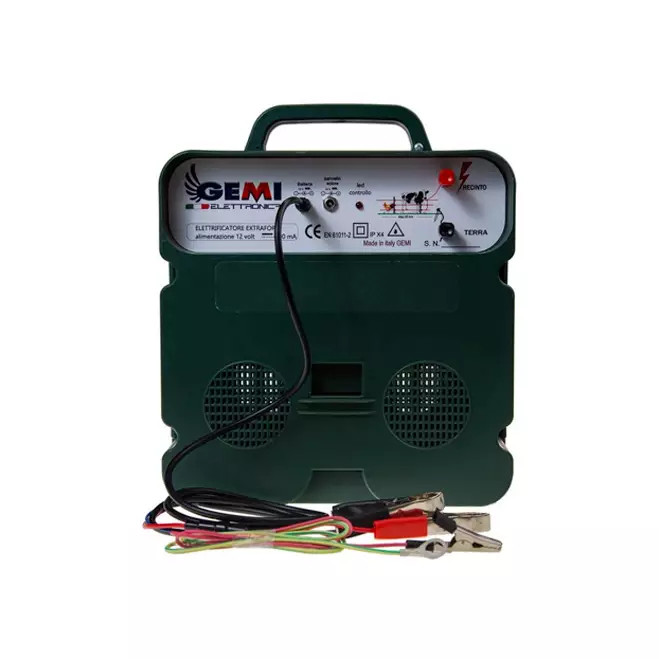
E/220 energizer with 220 V current – powerful and reliable, suitable for fences up to 5 km.
Insulated gate handles – for safe and convenient openings.
.
Conclusion
In short, the electric fence must be electrically closed , meaning it must ensure a continuous circuit to function properly. However, from a physical standpoint, it doesn't necessarily have to be completely closed: gates or openings may be present, which must be appropriately managed to maintain the safety and effectiveness of the system.
Choosing quality products and performing regular checks are essential to ensure maximum efficiency of your electric fence. Gemi Elettronica is the ideal partner for those seeking reliable and professional solutions.