



How long does an electric fence battery last? A complete guide to battery life and maintenance.
Gemi Elettronica ·

When designing or managing an electric fence to protect livestock or crops from wildlife, one of the most frequently asked questions concerns power supply. Especially for those without direct access to a 230V power grid, the battery becomes the beating heart of the entire system. But how long does an electric fence battery actually last?
There's no single answer, as battery life depends on a delicate balance between the energizer's power, the quality of the fence's insulation, and environmental conditions. In this article, we'll analyze in detail the factors that determine the longevity of a charge and how to maximize the efficiency of your Gemi Elettronica system.
Battery capacity and power consumption of the energizer
The first factor to consider is the technical relationship between battery capacity (expressed in ampere-hours, Ah) and the energizer's power consumption (expressed in milliamps, mA). An electric fence energizer doesn't emit a constant flow of energy, but releases high-voltage pulses separated by short time intervals.
If we use a battery energizer with an average current draw of 50 mA and a 50 Ah battery, theoretical calculations would suggest that the battery can last approximately 1,000 hours (just over 40 days). However, in practice, it's not advisable to completely discharge a battery, especially a lead-acid one, as this would compromise its longevity. Gemi Elettronica recommends always considering a 20-30% safety margin, reducing the actual battery life to preserve the health of the battery's chemical components.
The importance of line insulation
People often blame the battery if the fence stops working after a few days, but the real cause often lies along the perimeter. An electric fence is an open circuit that closes only when an animal touches the wire. However, if tall grass touches the conductors, the insulators are worn, or the wire is rusty, current leaks into the ground.
These "losses" force the energizer to work harder to maintain the nominal voltage, dramatically increasing energy consumption. In a perfectly insulated system, the battery can last for months; in a system with significant losses caused by overgrown vegetation, the same battery could run out in less than a week. Keeping the perimeter clean and using high-quality insulators is the first step to ensuring long battery life.
Battery types compared
Choosing the right power source is crucial. There are three main solutions used in electric fencing:
- Dry cell batteries (non-rechargeable): Usually 9V, they are practical and lightweight. They have a constant voltage that gradually decreases until they are exhausted. Their lifespan varies from 3 to 6 months depending on the pulse strength, but once discharged, they must be disposed of.
- Rechargeable batteries (12V batteries): These are the most common, often derived from the automotive or utility sectors (AGM). They offer greater power, ideal for long ranges. Their lifespan depends on the capacity chosen, but they require regular charging cycles.
- Solar-powered systems: These represent the cutting edge of efficiency. By connecting a Gemi Elettronica solar panel to a 12V battery, a continuous cycle system is created. The panel charges the battery during the day, which powers the enclosure at night. With good sunlight, battery life can be virtually unlimited throughout the season.
The impact of temperature and climatic conditions
Battery performance is significantly affected by climate. During the winter months, low temperatures slow down the chemical reactions inside the battery, reducing its effective capacity. A battery that provides 30 days of battery life in the summer may drop to 20 days during a severe frost.
Furthermore, high humidity can promote micro-discharges on the insulators, slightly increasing overall consumption. It's therefore essential to monitor the charge status more frequently during cold or rainy periods to avoid the enclosure remaining inactive just when wild animals are most active in their search for food.
How to monitor and optimize duration
To avoid finding yourself with a dead fence, it's essential to adopt some technical measures. Gemi Elettronica integrates LED indicators into its energizers to indicate battery status. A weekly visual check allows you to intervene before the voltage drops below a critical threshold.
Another trick to extend battery life is power regulation. If the fence is intended for pets already trained to respect the wire, it's not always necessary to use the pulse at maximum power. Reducing the output power, where possible, allows you to save a significant amount of amperes per hour. Finally, using conductors with low electrical resistance (low ohms/meter) facilitates the passage of the pulse, reducing energy waste due to heat.
Why choose Gemi Elettronica solutions
Battery life isn't just a matter of size, but of the efficiency of the entire ecosystem. Gemi Elettronica energizers are designed with low-power consumption circuits that maximize the pulse effect while minimizing no-load consumption.
Gemi Elettronica offers solutions designed specifically for these scenarios. Here are the most suitable products for those who use a battery-powered energizer:
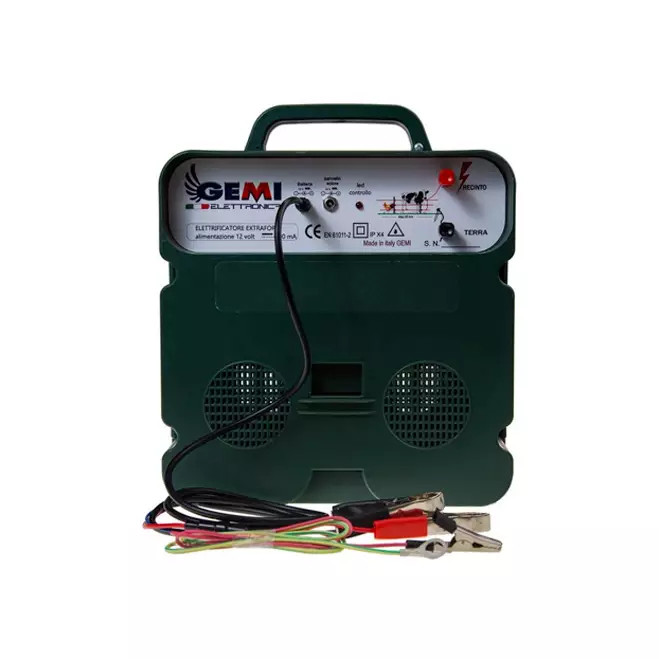
- B/12 battery-powered energizer 12V / 220V Designed to run on car or camper batteries, suitable for up to 5 km of fence.
- B/12 energizer with 12V / 220V solar panel Keeps the battery always charged, ideal for continuous autonomy without manual charging.
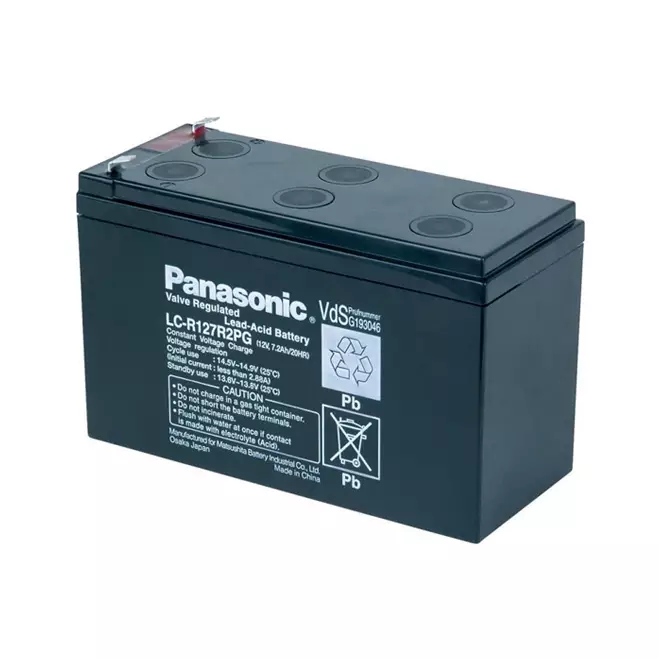
- 12V 7.2 Ah battery Compatible with all Gemi models, resistant, long-lasting, ready to use.
Combining a professional energizer with a suitable battery and, preferably, a solar kit means investing in the safety of your animals and the peace of mind of your work. Maintaining the greenery along the fence and choosing UV-resistant polycarbonate insulators will complete the job, ensuring that every single joule of energy is used for its intended purpose: protecting your property.
In conclusion, the battery life of an electric fence is a dynamic parameter. With proper installation, regular cleaning of the line, and the use of solar energy, it's possible to run efficient systems with minimal recharging, ensuring an impenetrable barrier 365 days a year.