




Pig Fencing: How to Design a Safe and Effective System
Gemi Elettronica ·
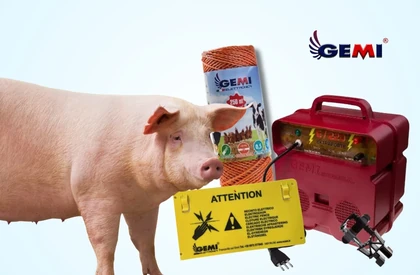
Raising pigs, whether in the wild or in small domestic pens, requires very careful space management. Pigs are extremely intelligent, curious, and physically strong animals, but they also have a peculiar characteristic: they tend to dig and push the base of pens.
A purely physical barrier, such as a wire fence, is often lifted or destroyed by the powerful snout of a boar or sow. For this reason, electric fencing is the ideal solution: it doesn't simply confine the animal, but "educates" it to respect the boundary through sensory stimulation. In this article, we'll see how to set up a safe, durable, and efficient pig fence using Gemi Elettronica technology.
Pig Psychology and Pen Training
Unlike other animals, pigs have excellent memories. Once they understand that the wire emits an unpleasant shock, they will tend to never approach it again, as long as the fence is kept taut.
However, a short training period is essential. When introducing pigs to a new electric fence, it's best to do so during the day and under supervision. A pig frightened by the first shock might run forward instead of backing away; once they understand the mechanism, however, the electric fence becomes the safest barrier in the world, much safer than a wooden fence.
Wire height and placement: the anti-digging strategy
Pigs don't jump, but explore the world with their snouts. The wire configuration should therefore focus on the lower-middle part of the enclosure. Gemi Elettronica generally recommends a 3-wire arrangement to ensure maximum containment:
- First wire (Low): Placed about 20-25 cm from the ground. This is the most important wire, as it prevents the pig from digging under the fence.
- Second wire (Intermediate): Positioned approximately 45-50 cm from the ground. It is used to strike the animal's nose when it attempts to force the barrier head-on.
- Third wire (High): Placed approximately 70-75 cm from the ground. Useful for large specimens or to prevent them from attempting to lean on the structure.
If the pen is intended for smaller pigs or dwarf breeds, the heights should be reduced proportionally, ensuring that the first wire is always at the height of their snouts.
Energizer power and land management
Pigs have fairly thick skin and a layer of fat that acts as a natural insulator. For this reason, the energizer must have a good output power (expressed in Joules). A pulse that is too weak may not be perceived as a real deterrent.
Another critical aspect is vegetation. Since the pig wires are positioned so low, grass quickly grows until it touches them. When grass touches the wire, it discharges energy to the ground, reducing the fence's tension. Gemi Elettronica recommends:
- Using powerful energizers capable of "burning" small, parasitic blades of grass.
- Keep the perimeter clean through regular mowing.
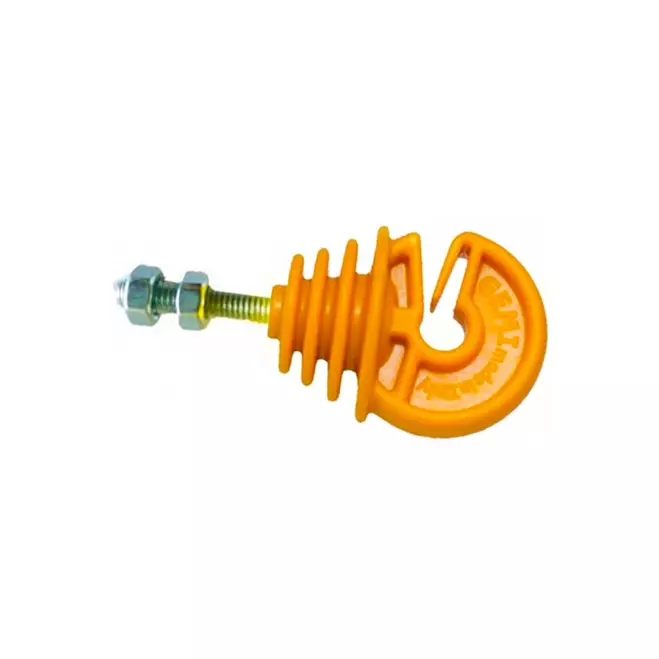
- Use high-tightness insulators to avoid dispersion on the support poles.
Power and grounding
For a pig pen, the ground must be perfect. If the soil is dry, conductivity decreases. It's essential to drive the ground stakes deeply (at least 1 meter) and, if necessary, water the area around the stake during dry periods.
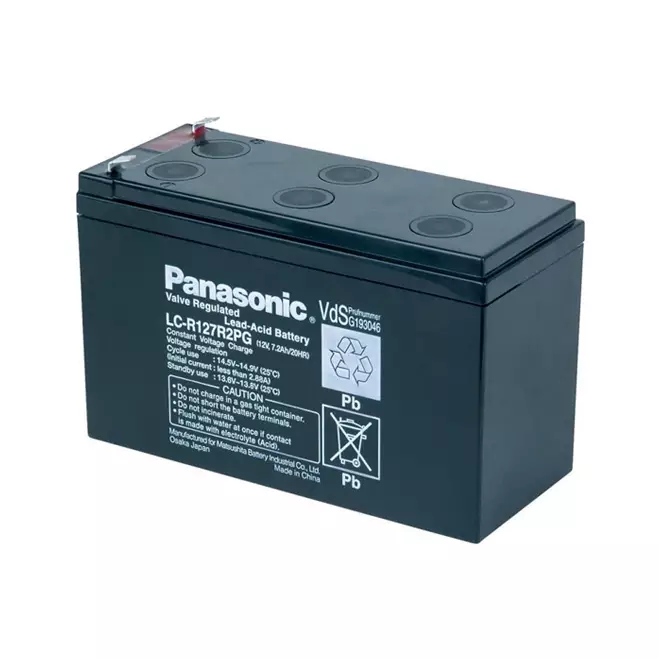
As for power supply, if the enclosure is far from a power grid, Gemi 12V solar panel systems are the perfect choice. They guarantee continuous operation without the need to change batteries every few days, ensuring the enclosure is always armed even when the breeder is away.
Safety and quality materials
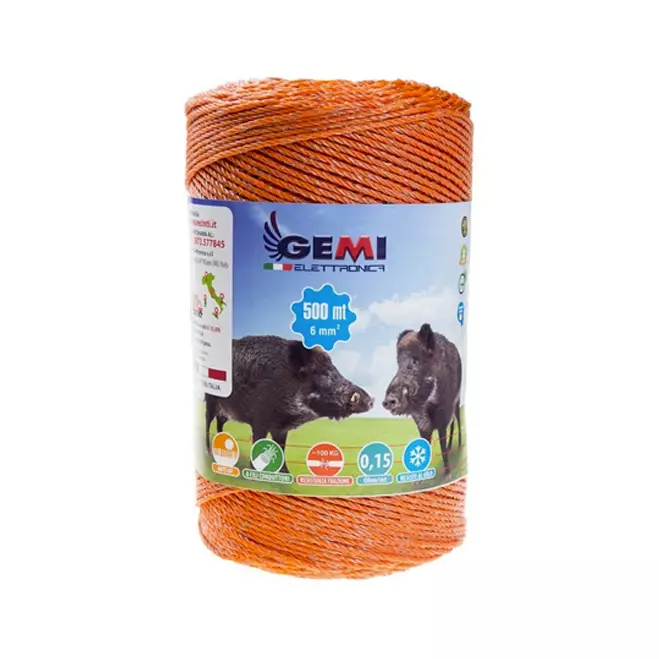
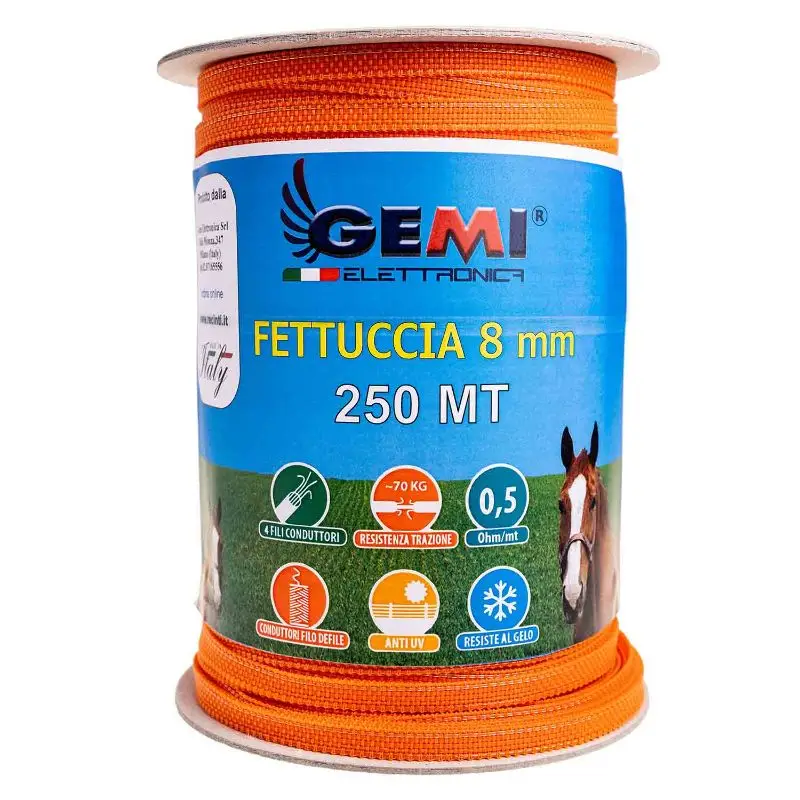
Pig leads should be clearly visible. Gemi Elettronica offers a wide range of wires and tapes with varying numbers of steel or copper conductors. For pigs, wire with good tensile strength is preferable, as the animals could accidentally bump into it while playing or digging.
Additionally, if you raise pigs in areas where predators (such as wolves) are present, electric fencing serves as double protection: it keeps the pigs inside and the predators outside.
For those looking for effective fencing solutions, Gemi Elettronica offers reliable and quality products:
- 250m 6mm² electric fence wire – durable and easy to install.
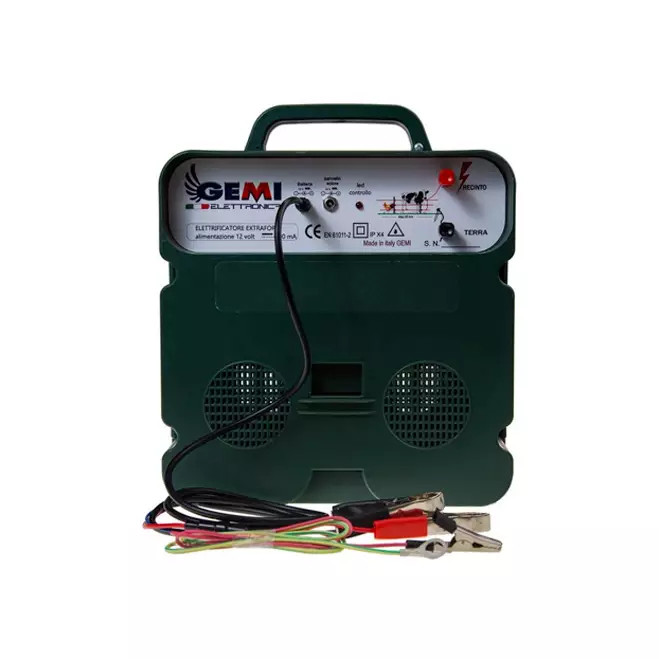
- B/12 Extra Strong 12 V Energizer with 2 Rechargeable Batteries – Power and Reliability for Electric Fences.
- Double Hook Electric Fence Insulator – for a safe and long-lasting installation.
- 1000m 6mm² White Wire – Durable and Easy to Install
Conclusions
Building an effective pig fence means understanding the animal's nature and providing clear, respectable boundaries. With the right components—a powerful energizer, wires positioned at the right heights, and regular vegetation maintenance—your farm will be protected and manageable with minimal effort.
Relying on Gemi Elettronica systems means choosing the experience of those who understand the challenges of the agricultural world and offer robust solutions for those who work with the land every day. A pig that respects the wire is a safe pig, and a happy farmer.